
How To Break A Car Window In Case Of Emergency: Safe Tips
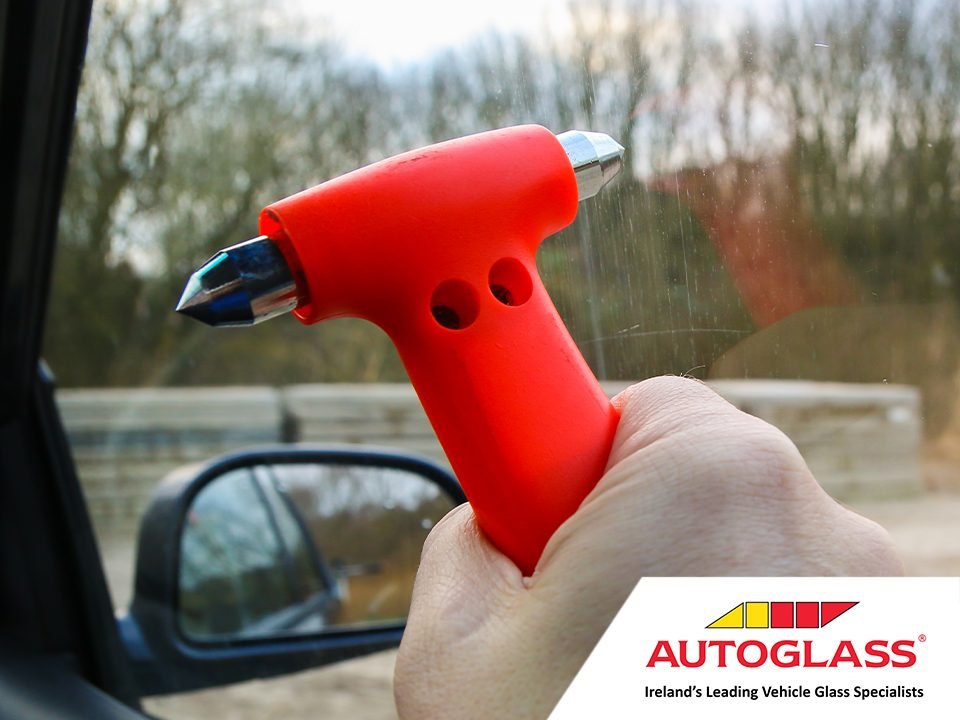
If someone is trapped in a vehicle and the doors will not open, call 911 and use a purpose-made car window breaker on a side window—only when breaking the glass is the safest way out. Aim for the lower corner of a tempered-glass side window, not the windshield. First check whether the window is laminated, because laminated glass may crack but stay in one piece.
Use this guide for a real emergency in the United States, such as a crash, fire, flood, or medical crisis. Do not break a vehicle that you do not own or have permission to enter unless you are acting to save someone from an immediate danger and local law allows it.
First, decide whether breaking the window is necessary
Break the glass only when a person cannot escape through an open door or another safe route. A broken window creates sharp edges, flying glass, cold air, water entry, and possible injury.
Take these steps first:
- Call 911. Give your location, the vehicle description, the number of people inside, and the danger.
- Try every door. A door may open even when the power locks or windows fail.
- Unlock the doors manually. Many vehicles have a manual lock switch or lever.
- Lower a working window. Use the window switch before the vehicle loses power.
- Move away from smoke, fire, traffic, or rising water.
- Break a window only if it gives the trapped person a safer escape route.
If the vehicle is on fire, leave as fast as possible. Do not spend time searching for the ideal window. If a door opens, use it.
For a child, injured person, or unconscious person, tell the 911 dispatcher what you see. Emergency responders may reach the vehicle quickly, but a fire, flood, or severe heat can make delay dangerous.

Know which car glass can break
The best escape window depends on the type of glass in the vehicle. Most vehicles use two main types.
Tempered glass
Tempered glass is heat-treated. When it breaks, it usually crumbles into many small pieces. Side and rear windows often use tempered glass, but this is not true for every vehicle.
A purpose-made glass breaker can often fracture tempered glass with one strong strike. The lower corner is usually a better target than the center because it may require less force and helps keep the person away from the largest glass area.
Laminated glass
Laminated glass has a plastic layer between two sheets of glass. A windshield is usually laminated. Some newer vehicles also use laminated glass in side windows.
Laminated glass may crack like a spiderweb but remain attached to its plastic layer. A standard pointed window breaker may not create an opening. A rescue tool designed and labeled for laminated glass may be needed, but cutting it can still be difficult in an emergency.
How to identify the glass
Look at the small marking in a corner of the window. It may say:
- TEMPERED
- LAMINATED
- A glass standard or manufacturer code
You may not be able to read the marking during a crash or flood. If you cannot confirm the type, choose a side window and be prepared for the tool to work slowly or not at all. Do not assume that every side window is tempered.
The windshield is usually the wrong choice. It is laminated, large, hard to remove, and part of the vehicle’s safety structure.

The safest tool for breaking a car window
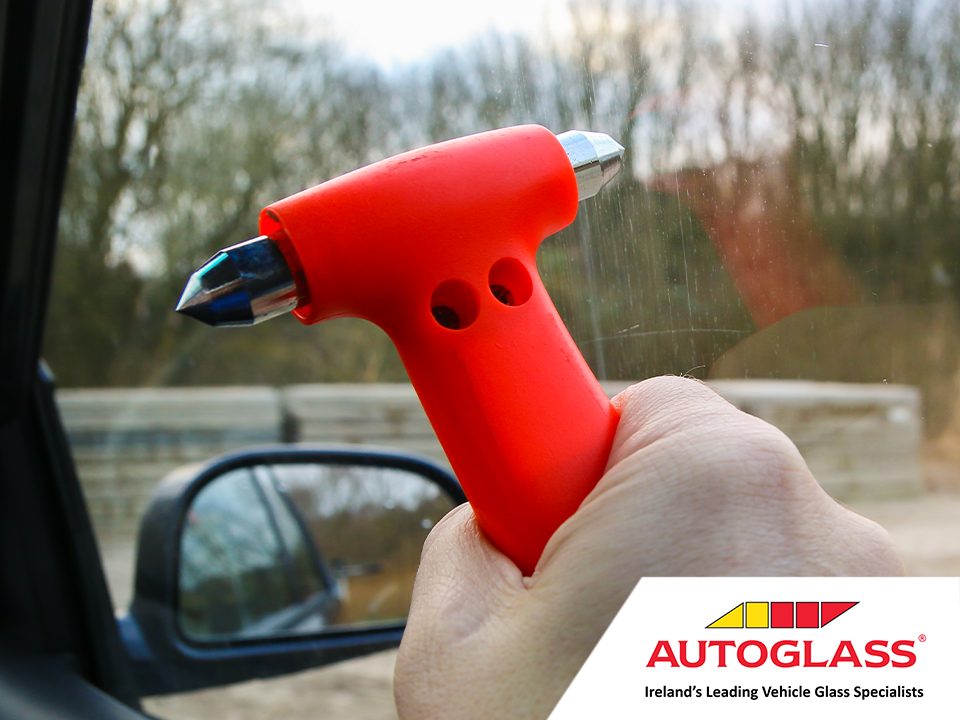
A purpose-made emergency car window breaker is safer and more reliable than a random heavy object. Common rescue tools include:
- Spring-loaded center punches
- Carbide-tipped glass breakers
- Combination tools with a belt cutter
- Rescue hammers designed for tempered glass
Keep the tool where the driver or passengers can reach it while seated. A tool locked in the trunk may be useless after a crash. Read the instructions before an emergency and check whether the tool is rated for tempered glass, laminated glass, or both.
A rescue tool is not a guarantee. Performance can vary by glass type, tool design, angle, vehicle position, and user strength. The National Highway Traffic Safety Administration provides vehicle safety information, but vehicle-specific glass details are best confirmed through the owner’s manual or automaker.
Do not rely on:
- Bare hands
- A fist, elbow, or foot
- A phone
- A small pocketknife
- A bottle
- A headrest removed from the seat
- A rock unless there is no safer option and escape is immediately necessary
Some emergency guides discuss using a sharp metal object or a detached headrest post. These methods are uncertain, can cause injury, and may not work on laminated glass. A dedicated tool is the better plan.

How to break a tempered car window
Use these steps only when a person must escape and no safer exit works.
1. Protect the person from glass
Move the person as far from the target window as possible. Cover the face, eyes, and hands with a coat, blanket, towel, or other thick fabric if one is available.
Keep children and other passengers away from the window. If the person is conscious, tell them to turn their face away and keep their mouth closed.
2. Choose a side window
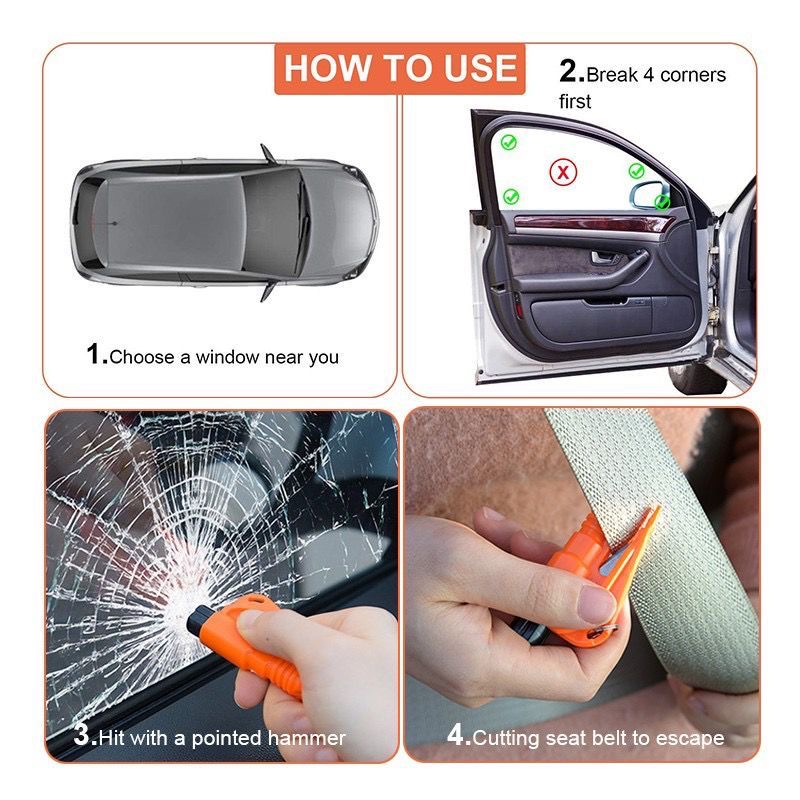
Select a side window that gives the clearest path out. Avoid the windshield when possible. Do not choose a window beside a person’s face or body if another window offers a safer exit.
If the vehicle is in water, choose a window that lets the person move toward the surface or away from the vehicle. Do not delay escape to find a perfect target.
3. Target a lower corner
Place the breaker near a lower corner of the tempered window. A corner is often easier to fracture than the center.
Keep your hand behind the tool’s guard, if it has one. Hold it firmly. Keep your face and eyes back from the glass.
4. Strike or press the tool
For a spring-loaded punch, press the tip firmly against the glass until the mechanism releases. For a rescue hammer, use a controlled strike at the lower corner.
Do not swing wildly. A controlled action helps keep the tool on the glass and reduces the chance of hitting a person, pillar, seat, or your own hand.
5. Clear the opening
Tempered glass may fall inward or outward. Use a coat, shoe, or another thick item to push loose pieces away from the opening. Do not sweep glass with bare hands.
Check the window frame before climbing through. Move slowly and cover exposed skin. If the opening is too small, use another window rather than forcing a body through sharp edges.
6. Escape and move away
Help the trapped person out if you can do so without entering danger. Move away from the vehicle, traffic, flames, smoke, or unstable ground.
Once clear, follow the 911 dispatcher’s instructions. Do not return to the vehicle for phones, bags, pets, or other items if doing so creates additional risk.

What to do if the window will not break
A failed attempt does not always mean you used the tool incorrectly. The window may be laminated, the tool may be unsuitable, or the glass may be difficult to reach.
If the glass cracks but stays in place:
- Stop striking if the tool is no longer working.
- Protect the person from loose glass.
- Try a different side window if one is available.
- Use a rescue tool rated for laminated glass if you have one.
- Try another door or the rear hatch.
- Tell 911 that the window will not open.
Do not spend many minutes repeating the same attempt while smoke, fire, water, or extreme heat is getting worse. Use the safest available exit.
If the vehicle is submerged, electrical systems may stop working. Try the window switch immediately. If it fails, use the emergency tool. The National Highway Traffic Safety Administration advises drivers to act quickly in a submerged vehicle: unbuckle, open or break a window, get out, and help children after reaching safety when possible. Do not wait for the cabin to fill completely if a usable exit is available.
If water pressure prevents a door from opening, do not waste time forcing it while the vehicle is sinking. A window is usually the more practical escape route before the cabin fills.
Special dangers to consider
A vehicle fire
Smoke and heat can become life-threatening quickly. Use any working door first. If a door is jammed, break a side window and move away from the vehicle.
Do not open the hood. Do not crawl under or around the vehicle. Leave the area and wait for firefighters.
A submerged vehicle
Unbuckle the seat belt first. If a child is present, adults may need to help the child after creating an exit. Water can make movement difficult, so keep actions simple and direct.
If the vehicle has electric windows, try them at once. If the vehicle is already filling with water, do not wait for roadside assistance or a tool stored out of reach.
A crash with traffic nearby
Watch for moving vehicles before stepping out. If the vehicle is in a live traffic lane and the occupants can move safely, exit away from traffic and go behind a barrier if one is available.
Do not stand next to the vehicle. Call 911 and tell the dispatcher the direction of traffic and the vehicle’s location.
A child or pet inside
A child or pet can suffer dangerous heat exposure even when the outside temperature does not feel extreme. Call 911, break a window only if immediate rescue requires it, and choose the window farthest from the person if possible.
Do not leave a rescued child or pet near the roadway or vehicle. Move them to shade or a safe area while waiting for help.

Common mistakes to avoid
The most common mistake is assuming that every car window breaks in the same way. Glass type differs by vehicle and by window.
Avoid these errors:
- Breaking the windshield first: It is usually laminated and difficult to remove.
- Striking the center of the window: A lower corner may be easier to fracture.
- Using bare hands: This can cause deep cuts.
- Standing close to the glass: Broken pieces can fall or fly.
- Keeping the tool in the trunk: The trunk may be inaccessible after a crash.
- Ignoring a working door: A door is usually safer than broken glass.
- Waiting too long in a flood or fire: Conditions can worsen quickly.
- Assuming a window breaker works on laminated glass: Many do not.
- Climbing through without clearing the frame: Remaining glass can cut skin and clothing.
- Returning to the vehicle: Fire, traffic, electricity, and unstable structures remain hazards.
A hammer, rock, or other object may be a last resort when a person faces immediate danger and no purpose-made tool is available. It is not a reliable general method, and it increases the risk of injury and property damage.

How to prepare before an emergency
The best time to plan an escape is before a crash happens.
Keep a window breaker within reach of the driver and passengers. Check that the tool is easy to use and that its belt cutter, if included, is accessible. Practice locating it, but do not strike a vehicle window during practice.
You can also:
- Read the vehicle owner’s manual.
- Identify which windows are tempered or laminated.
- Teach older children how to unlock a door.
- Check that seat belts release normally.
- Keep a small flashlight in the passenger area.
- Review a family escape plan.
- Replace a damaged or expired rescue tool.
- Store emergency tools where they cannot become loose projectiles.
A tool is only part of the plan. A calm sequence—unlock, lower a window, open a door, call 911, then break glass if needed—can save time.

Quick decision guide
| Situation | First action | Best escape choice |
|---|---|---|
| Door opens | Leave through the door | Open door |
| Window works | Lower it fully | Open window |
| Fire or smoke | Call 911 and get out fast | Door, then side window |
| Rising water | Unbuckle and open a window | Working window |
| Side window is tempered | Use a rescue breaker | Lower corner |
| Side window is laminated | Try another exit | Laminated-glass tool if available |
| Windshield is the only option | Follow 911 instructions | Last resort only |
| Tool fails | Try another safe exit | Door, hatch, or another window |
The deciding factor is not the brand of tool or the force used. It is whether the chosen exit can open quickly without placing the trapped person in greater danger.

Frequently asked questions
Can I break a car window with a seat-belt cutter?
No. A seat-belt cutter is designed to slice webbing, not glass. Some combination rescue tools include both a glass breaker and a seat-belt cutter, but the functions are separate.
Which car window should I break first?
Choose a side window that provides the safest path out. If it is tempered glass, target a lower corner with a purpose-made breaker. Avoid the windshield unless emergency responders direct you to use it or no other exit exists.
Do car window breakers work on all windows?
No. Many work well on tempered glass but do little to laminated glass. Check the tool’s instructions and the vehicle’s glass marking. A tool advertised for both types may still require a different method for laminated glass.
Can I break a window to rescue someone from a hot car?
If a person or animal faces an immediate health threat and no door can be opened, call 911 and act according to the dispatcher’s instructions. In the United States, laws about entering or damaging another person’s vehicle vary by state. Emergency rescue can be legally protected in some situations, but legal protection is not universal.
Should I break the window before the vehicle enters water?
If a vehicle is already sinking or entering water, use a working window or door at once. Do not delay to search for a tool. Keep a rescue tool within reach, not in the trunk, and act quickly.
What should I do after breaking the glass?
Move away from the vehicle and traffic, check for serious injuries, and wait for emergency responders. Do not drive the vehicle until it has been inspected. Broken glass, damaged wiring, water, and deployed safety systems can create additional hazards.
Final safety reminder
Breaking a car window is an emergency escape method, not routine vehicle access. Call 911, use a door or working window when possible, protect the person from glass, and use a rescue tool on a tempered side window when immediate danger leaves no safer choice. If the glass does not break, change the plan quickly rather than repeating a failed attempt.