
How Do Car Seat Covers Work: Benefits, Fit & Care
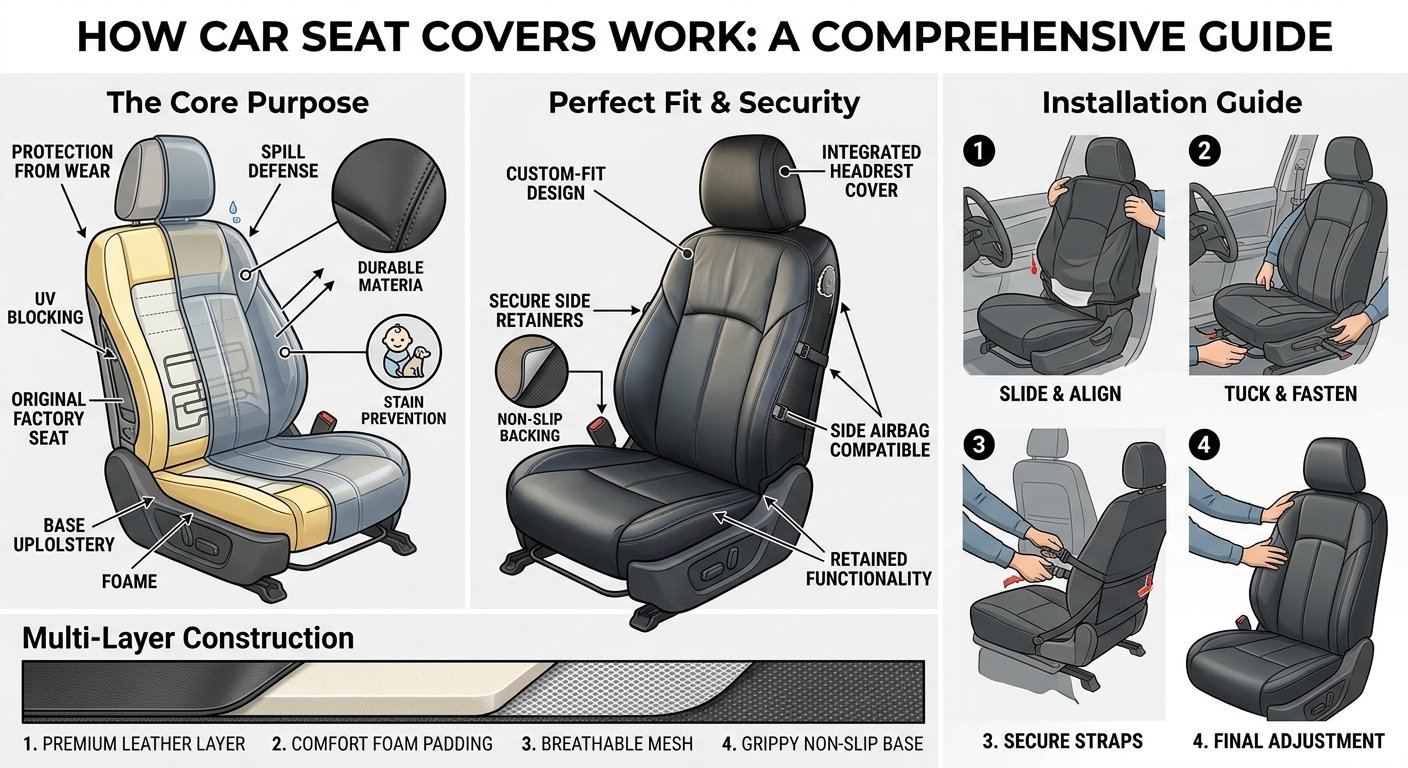
Car seat covers protect factory upholstery by adding a fitted layer that blocks wear, spills, heat, and stains.
If you have ever wondered how do car seat covers work, the answer involves more than simple fabric protection. A well-made cover fits over the seat, stays in place with straps or anchors, and helps shield the original upholstery from daily damage. This guide explains the materials, fit, safety concerns, benefits, limits, and care tips so you can choose and use seat covers with confidence.
What Are Car Seat Covers?
Car seat covers are removable layers placed over a vehicle’s seats. They may cover the seat cushion, backrest, headrest, and sometimes the armrests. Covers come in many materials, including cloth, neoprene, leatherette, canvas, mesh, and waterproof polyester.
The main goal is to protect the original seat from:
• Food and drink spills
• Pet hair and muddy paws
• Sweat and body oils
• Sun damage
• Scratches and stains
• Daily friction from entering and leaving the vehicle
To understand how do car seat covers work, think of them as a protective jacket for your seats. The jacket takes the wear while the factory upholstery stays cleaner and looks newer.
Some covers also change the feel of the seat. A mesh cover may improve airflow in hot weather. A padded cover may add comfort during a long drive. A waterproof cover may help keep liquid from reaching the foam beneath the upholstery.

How Do Car Seat Covers Work?
Car seat covers work through a mix of coverage, friction control, material resistance, and secure attachment. The cover sits between the passenger and the original upholstery. When a spill or stain occurs, the removable cover takes most of the impact.
Here is how the process works:
- The cover forms a barrier over the seat.
- Straps, clips, elastic edges, or anchors hold it in place.
- The material resists water, dirt, heat, or abrasion.
- The cover can be removed for cleaning or replacement.
- The original seat remains less exposed to daily use.
The answer to how do car seat covers work also depends on the material. A waterproof cover may stop liquid from passing through, while a breathable cover mainly reduces heat and friction. No cover blocks every type of damage, so the design must match your needs.
A cover can also reduce movement across the seat surface. This matters because loose fabric may bunch under your body. A snug fit spreads pressure more evenly and feels more stable.
However, car seat covers do not repair damaged upholstery. They hide existing wear and may slow further damage. If the seat foam is broken or the upholstery is torn, a cover can improve appearance but cannot restore the seat’s original structure.

How Different Seat Cover Materials Work
Material affects comfort, protection, cleaning, and durability. Learning how do car seat covers work starts with knowing what each material can and cannot do.
Cloth Seat Covers
Cloth covers are often affordable and comfortable. They feel close to normal upholstery and usually allow some air movement. Many cloth covers can be machine washed, but you should follow the care label.
Cloth is a good choice for:
• Everyday family use
• Mild spills
• Warm climates
• Drivers who want a soft feel
Basic cloth may absorb liquids. For stronger spill protection, look for treated fabric with a water resistant backing.
Neoprene Seat Covers
Neoprene is a flexible synthetic rubber material. It is common in outdoor and water focused seat covers because it resists moisture and handles rough use well.
Neoprene covers can work well for:
• Beach trips
• Camping
• Sports equipment
• Wet clothing
• Active pets
They may feel warmer than cloth. They can also cost more, especially when custom cut for a specific vehicle.
Leatherette and Vinyl Covers
Leatherette and vinyl have a smooth surface that is easy to wipe. They can give an older interior a cleaner, more polished look.
These materials resist many liquid spills, but heat can be a concern. Dark vinyl may become very hot in direct summer sun. It can also crack if exposed to heat and poor care for long periods.
Mesh Seat Covers
Mesh covers focus on airflow. Their open structure allows more ventilation between your body and the seat.
They are useful for:
• Hot weather
• Drivers who dislike sweaty seats
• Long commutes
• Vehicles without strong seat ventilation
Mesh does not always provide strong spill protection. It may also catch pet hair or small debris.
Canvas and Heavy Duty Covers
Canvas covers use thick, tough fabric. They are made for work trucks, utility vehicles, and people who carry dirty tools or outdoor gear.
They usually resist abrasion better than thin fabric. The tradeoff is a stiffer feel and less breathability. They may also take more time to install and remove.

What Are the Main Benefits of Car Seat Covers?
Understanding how do car seat covers work makes their benefits easier to judge. They are not just decorative accessories. They can help manage real problems caused by daily driving.
Protection From Stains and Spills
A cover can catch coffee, soda, mud, and food before these substances reach the factory upholstery. This is especially helpful for families with young children.
Still, “waterproof” does not always mean liquid proof in every situation. Seams, openings, and loose edges may allow water to pass through. Wipe spills quickly, even when the cover claims strong water resistance.
Easier Cleaning
Most covers are easier to remove and clean than built-in upholstery. A washable cover can save time after a muddy trip or a pet accident.
Always check the label before using a washing machine. Hot water, bleach, or high dryer heat may shrink the cover or damage its protective coating.
Better Resale Appeal
Clean seats can improve the overall appearance of a used vehicle. Seat covers may help limit stains, fading, and wear while you own the car.
They do not guarantee a higher resale price. Buyers also inspect the carpet, dashboard, mechanical condition, and service history. A cover protects an investment, but it cannot replace regular vehicle care.
More Comfort
Some covers add padding or improve airflow. A padded cover can make a firm seat feel softer. A ventilated cover can reduce heat during summer.
Comfort is personal. Extra padding may change your driving position and could interfere with proper support. Test the cover on a short trip before using it for a long journey.
Personal Style
Seat covers allow you to change the interior color or texture without replacing the seats. This can be a simple way to refresh an older car.
Choose a design that does not create glare on the windows or block important controls. Function should come before appearance.

How to Install Car Seat Covers Correctly
A good fit is central to how do car seat covers work. Even a high quality cover may perform poorly if it moves, folds, or blocks a safety feature.
Use these steps:
- Read the vehicle and cover instructions.
- Remove the headrest if the design requires it.
- Identify the cover for each seat.
- Slide the cover over the seat back and cushion.
- Feed straps through the correct gaps.
- Attach hooks, clips, or anchors underneath the seat.
- Smooth out wrinkles and center the seams.
- Reinstall the headrest and check its movement.
- Sit down and test whether the cover shifts.
- Confirm that belts, buckles, levers, and controls remain clear.
Do not pull straps so tightly that they damage seat parts. Do not attach hooks to wiring, seat rails, or moving mechanisms. Look beneath the seat before securing anything.
A lesson from many real world installations is that rushing the final adjustment causes most problems. The cover may look fine at first but slide forward after several trips. Spend a few extra minutes smoothing the fabric and checking the underside.
Custom fit covers usually take longer to install than universal covers. They often provide a cleaner appearance because they match the shape of a specific seat.

Are Car Seat Covers Safe?
Safety is the most important part of how do car seat covers work. A cover must protect the seat without blocking airbags, belts, sensors, or child restraint systems.
Many front seats contain side impact airbags. These airbags may deploy from the outer side of the seat back. A cover that blocks or restricts the airbag opening can affect deployment.
Before buying, check for:
• Airbag compatible labeling
• Clear stitching near the airbag area
• Openings designed for the vehicle’s seat shape
• Compatibility with seat sensors
• Compatibility with heated or ventilated seats
Never assume that a universal cover is safe for every vehicle. Confirm the product instructions and vehicle manual. If the manufacturer warns against seat covers, follow that warning.
Car Seat Covers and Child Safety Seats
Do not place a loose cover, thick cushion, or bulky pad under a child safety seat unless the child restraint manufacturer approves it. Extra material can affect how tightly the restraint fits.
A child safety seat should sit firmly on the vehicle seat. The seat belt or lower anchors must hold it according to the child restraint instructions. A cover that bunches beneath the base may create unwanted movement.
Some products are designed specifically for use under child seats. Even then, check approval from both the vehicle seat cover maker and the child restraint maker.
Heated and Ventilated Seats
Some covers can reduce heat transfer or block ventilation holes. Thick material may make a heated seat feel slower. It may also reduce airflow from a ventilated seat.
Use a cover designed for heated or ventilated seats when possible. Avoid covers that trap excessive heat or have materials not rated for the seat’s operating temperature.
Seat Belts and Controls
The cover should never cover a seat belt buckle, belt path, seat adjustment lever, or electrical control. If you need to reach around the cover to buckle up, the fit is not acceptable.
Check the seat after installation and again after a few drives. Covers can shift over time, especially on smooth leatherette surfaces.
Universal Versus Custom Fit Seat Covers
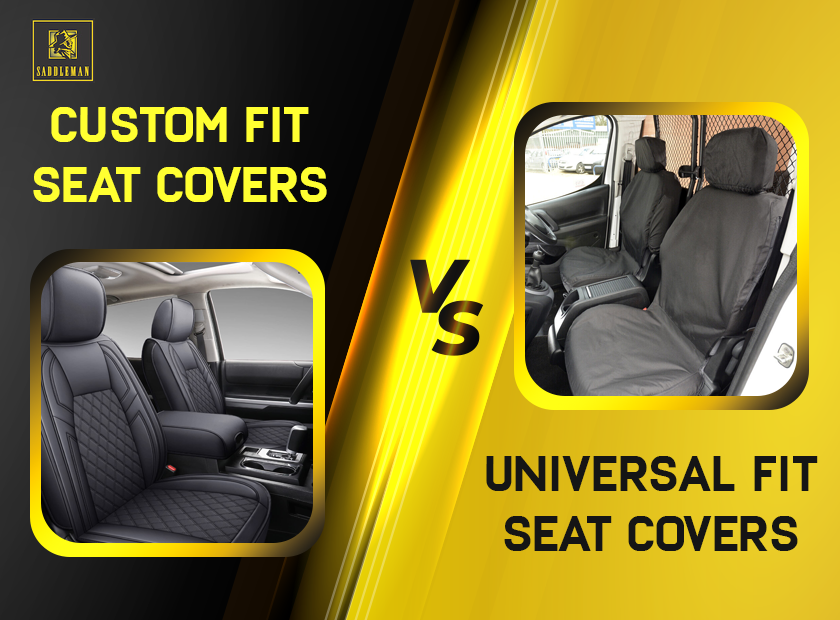
The choice between universal and custom fit covers affects how do car seat covers work in daily use.
Universal Fit Covers
Universal covers are made to fit many vehicles. They are usually less expensive and easier to find in stores.
Advantages include:
• Lower cost
• Simple replacement
• Fast installation
• Many color choices
Their main weakness is fit. Loose areas may wrinkle, slide, or expose parts of the original seat. They may also have fewer options for airbags and unusual seat shapes.
Custom Fit Covers
Custom fit covers are designed for a specific vehicle, trim, and seat layout. They often match the headrests, armrests, center consoles, and airbag areas more accurately.
They usually offer:
• Better appearance
• Less movement
• Cleaner access to controls
• More precise airbag openings
• Stronger long term comfort
They cost more and may require more installation time. For a vehicle you plan to keep for years, the better fit may justify the added expense.

Common Mistakes to Avoid
Knowing how do car seat covers work helps prevent simple but costly errors.
Choosing Style Over Safety
A cover may look attractive but lack proper openings for side airbags. Always check safety compatibility before color, pattern, or price.
Using a Loose Cover
Loose fabric can bunch beneath you and become uncomfortable. It may also interfere with belts or controls. Choose a better fit or adjust the attachment points.
Ignoring the Seat Material
Some covers trap heat on leather seats. Others may rub against delicate surfaces. Check the product instructions for leather, vinyl, cloth, and synthetic materials.
Washing the Cover Incorrectly
Strong detergents and high heat can damage coatings, elastic, and stitching. Follow the cleaning instructions and allow the cover to dry fully before reinstalling it.
Leaving Moisture Under the Cover
Water trapped between the cover and seat can cause odors and may contribute to mold on some materials. Remove the cover and dry both surfaces after a wet trip.
Covering a Damaged Seat Without Inspection
A cover may hide torn foam, broken springs, or exposed wiring. Inspect the seat first. Serious damage may need professional repair.

How to Clean and Maintain Car Seat Covers
Regular care helps a cover last longer and keeps the vehicle interior fresh. Your maintenance plan depends on the material.
For most covers:
- Vacuum loose dust and hair.
- Remove the cover according to the instructions.
- Treat stains quickly with a mild cleaner.
- Wash or wipe the cover as directed.
- Air dry it completely.
- Inspect straps, clips, seams, and openings.
- Reinstall it without covering safety features.
Avoid harsh solvents unless the manufacturer approves them. Some cleaners can weaken waterproof coatings or discolor vinyl.
Check the cover every few weeks. Look for stretched elastic, loose stitching, broken clips, and areas that have moved out of position. Early repairs are easier than replacing the entire cover.
Pet owners may benefit from a waterproof base layer and a washable top layer. However, stacking covers can affect fit and safety. Use only combinations approved for your vehicle and seat design.
How to Choose the Right Car Seat Covers
Start by identifying your main problem. The best cover for a dog owner may not be the best cover for a commuter or a work truck.
Consider these factors:
• Vehicle year, make, model, and trim
• Front and rear seat shape
• Side airbag placement
• Heated or ventilated seat functions
• Child restraint use
• Climate and sunlight
• Pet or cargo exposure
• Cleaning needs
• Budget and expected service life
Look for clear product information. A trustworthy listing should explain material, fit, care instructions, airbag compatibility, and included attachment parts.
Read reviews with care. A cover may fit one trim level well and another poorly. Reviews are useful, but your vehicle’s exact seat design matters more than a general star rating.
If possible, buy from a seller with a return policy. Fit is difficult to judge from photos alone. Take pictures of the seat layout before ordering so you can compare the product design.
Frequently Asked Questions About How Do Car Seat Covers Work
Do car seat covers protect against water?
Some car seat covers resist or block water with coated fabric, sealed seams, or waterproof backing. However, openings and stitching may still allow liquid through, so clean spills quickly.
Can car seat covers damage leather seats?
Poorly fitted covers can rub leather and trap heat or moisture. Choose a breathable, compatible product, keep both surfaces clean, and check for movement during regular use.
Are car seat covers safe with side airbags?
Only covers designed and approved for seats with side airbags should be used. Check for proper airbag openings and follow both the vehicle manual and cover instructions.
Can I use seat covers with heated seats?
Some covers are compatible with heated seats, while thick or heat sensitive materials may reduce performance. Confirm compatibility before installation and avoid materials that trap excessive heat.
Do car seat covers work with child car seats?
Not all covers are safe beneath child restraints. Use only a product approved for that purpose, and make sure the child seat remains firmly installed according to its instructions.
How often should I wash car seat covers?
Wash them when they become stained, dirty, or odorous, and follow the care label. Many drivers benefit from a light vacuum each week and a deeper clean every few months.
Are custom fit covers better than universal covers?
Custom fit covers usually stay in place better and provide cleaner access to seat features. Universal covers cost less, but they may move or leave parts of the original upholstery exposed.
Conclusion
Car seat covers work by placing a removable protective layer between passengers and the vehicle’s original upholstery. Their performance depends on material, fit, attachment, cleaning, and compatibility with airbags, belts, seat sensors, and child restraints.
The safest choice is not always the cheapest or most attractive one. Match the cover to your vehicle, inspect the fit after installation, and follow the manufacturer’s care and safety guidance. Compare compatible options today, protect your interior with confidence, and share your experience with car seat covers in the comments.