
How To Organize Trunk Of Car: Smart Storage Tips
Introduction
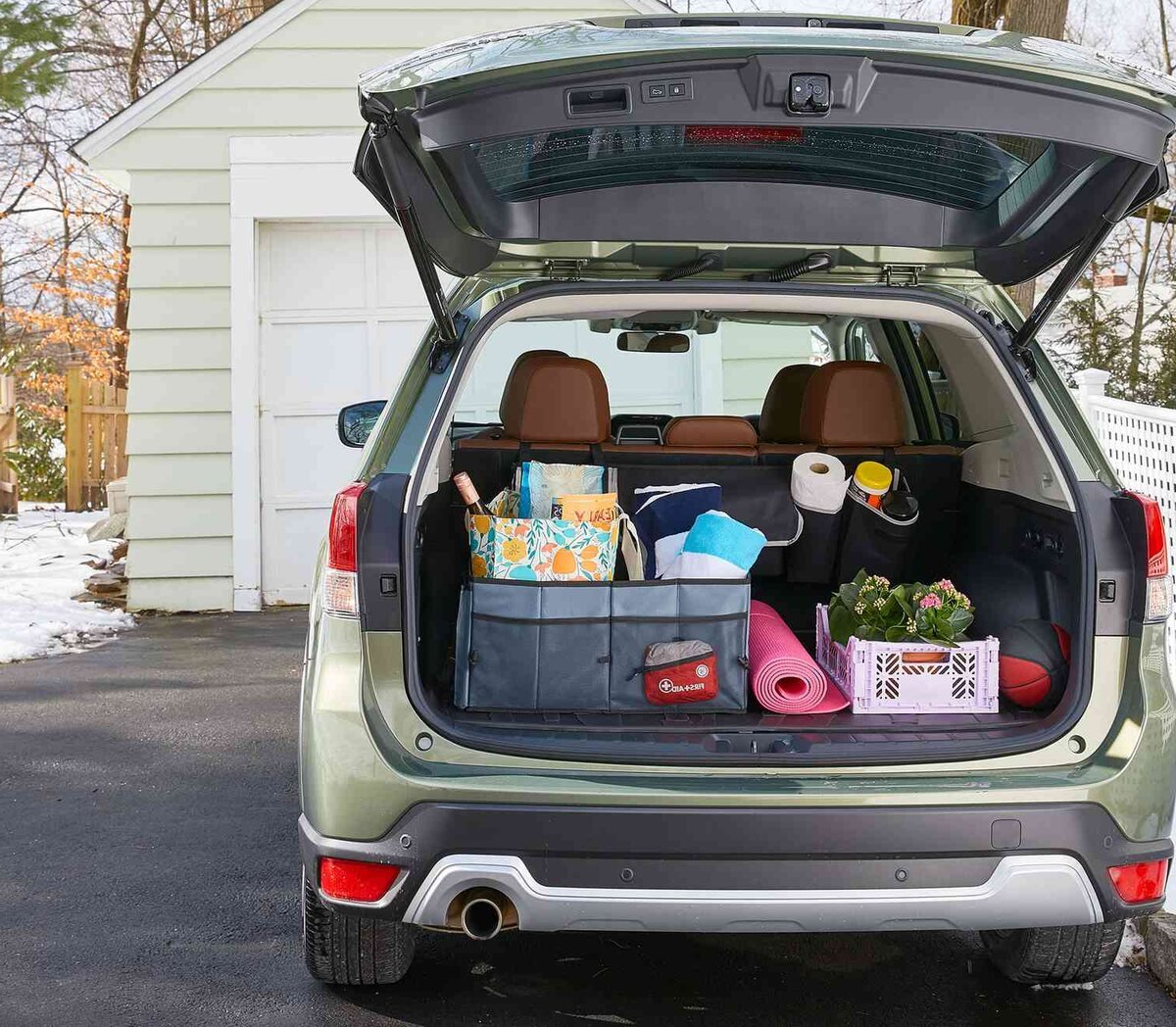
The best way to organize the trunk of your car is to remove everything, group items by use, place heavy items low and near the back seats, and secure anything that could move during a sudden stop. Keep daily items easy to reach, protect the trunk floor, and leave clear space for groceries or larger loads.
This guide works for sedans, hatchbacks, SUVs, and minivans used in the United States. It also covers safety limits, emergency supplies, seasonal changes, and simple storage tools that do not waste space.
1. Empty and Clean the Trunk First
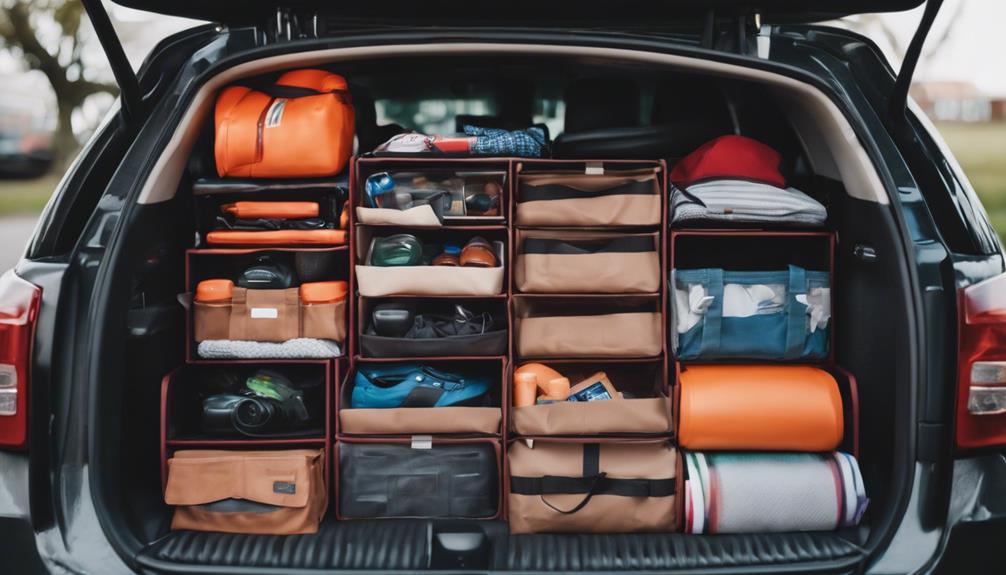
Start with a completely empty trunk. You cannot build a useful system around old receipts, empty boxes, sports gear, and items you no longer need.
Take everything out and sort it into four groups:
- Keep in the car: items you use often or need during travel.
- Move to the home: items that belong in your house or garage.
- Return or deliver: borrowed items, packages, or returns.
- Recycle or discard: trash, worn-out supplies, and broken items.
Next, vacuum the trunk and wipe the floor, side panels, and spare-tire cover. Cleaning first helps you find water leaks, rust, stains, loose trim, or a damaged cargo liner.
Check the spare-tire well if your vehicle has one. Some cars store the spare tire, jack, tire tools, or battery in this area. Do not cover these items with heavy cargo unless you can still reach them quickly.
Check for moisture and damage
A damp trunk can damage clothing, paper goods, tools, and electronics. Look for wet carpet after rain or a car wash. If the trunk stays wet, check the owner’s manual or ask a qualified automotive repair shop to inspect seals, vents, lights, and drain paths.
Do not simply place a plastic bin over a leak. The water will still collect underneath it.

2. Sort Trunk Items by How Often You Use Them
Group items by purpose before you decide where they should go. This makes the system easier to maintain.
A useful set of groups is:
| Group | Common examples | Best storage area |
|---|---|---|
| Daily-use items | Reusable bags, small umbrella, wipes | Near the trunk opening |
| Emergency supplies | First-aid kit, flashlight, jumper cables | Fixed, easy-to-reach location |
| Car-care items | Washer fluid, tire gauge, cloths | Side pocket or sealed bin |
| Work or school items | Shoes, lunch bag, change of clothes | Small removable tote |
| Sports or hobby gear | Balls, gloves, helmets, folding chairs | Large bin or cargo net |
| Seasonal items | Ice scraper, blankets, sunscreen | Rotated as weather changes |
| Rare-use items | Tools, spare supplies, large covers | Under-floor storage or far corners |
Keep similar items together. For example, place tire tools with the tire gauge and work gloves instead of scattering them across the trunk.
Use a simple rule: the more often you use an item, the closer it should be to the trunk opening. Items used once or twice a year can go in deeper storage, as long as they do not block emergency equipment.
Do not keep your entire life in the trunk. Extra clutter adds weight, uses fuel, and makes it harder to find what you need.

3. Create Trunk Zones
Assign each part of the trunk a job. A few clear zones work better than many small containers.
Zone 1: The access zone
Place daily items closest to the trunk opening. This may include:
- Grocery bags
- A compact umbrella
- Reusable shopping totes
- A small towel
- Cleaning wipes
- A foldable box
These items should come out without moving heavier cargo.
Zone 2: The safety zone
Keep emergency supplies in one marked bag or bin. Useful items may include:
- First-aid supplies
- Flashlight with spare batteries
- Reflective vest
- Drinking water
- Basic work gloves
- Tire pressure gauge
- Phone charging cable or power bank
- Blanket or warm layer
- Warning triangles or another visible warning device
The right kit depends on your climate, travel habits, and vehicle. A driver in rural Montana may need different winter supplies than a driver in South Florida.
Zone 3: The load zone
Use the center and rear-seat side of the trunk for heavier items. Keep these items low. Place them against the rear seatback when possible.
Examples include:
- Small tool kits
- Pet food
- Folding chairs
- Car-care supplies
- Sports equipment
- Reusable grocery crates
Zone 4: The flexible zone
Leave some open space for changing needs. A completely full trunk may look tidy, but it will not work well when you need to carry groceries, luggage, or a stroller.
A good system has room to change.

4. Place Heavy Items Low and Secure Loose Cargo
Heavy objects should sit on the trunk floor, not on top of soft bags or near the rear window. Keep them as close to the rear seatback as practical.
Loose cargo can move forward when you brake or stop suddenly. A heavy tool, bottle, or piece of sports equipment can damage the vehicle or injure someone. The National Highway Traffic Safety Administration advises drivers to secure cargo and avoid objects that could interfere with driving controls or visibility.
Use one or more of these methods:
- A trunk organizer with a firm base
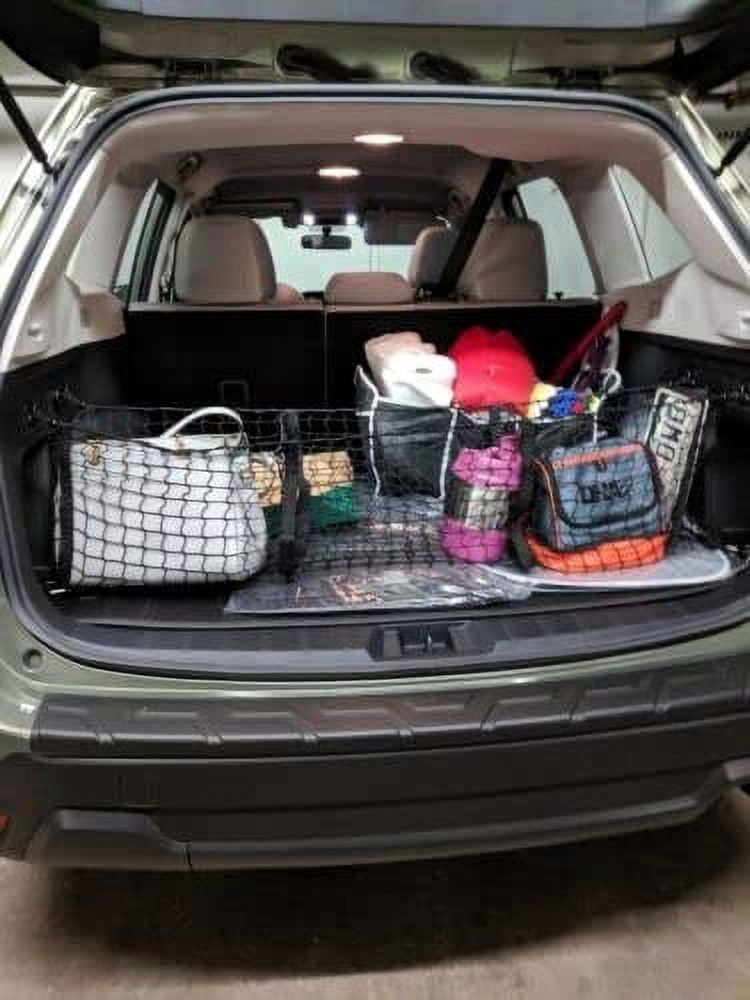
- A cargo net designed for your vehicle
- Hook-and-loop strips made for automotive use
- A divider that fits the trunk
- A covered storage bin with a locking lid
- Factory tie-down points
- A pet barrier for animals in an SUV or hatchback
Follow the vehicle owner’s manual for tie-down points and cargo limits. Do not attach straps to parts that are not designed to hold cargo.
Keep the rear view clear
Do not stack bags or boxes above the bottom of the rear window in a sedan. In an SUV or hatchback, use a cargo cover when the vehicle has one. You should be able to see through the available mirrors and maintain a clear view around the vehicle.
Never place cargo where it can block:
- The driver’s view
- Rear lights
- License plates
- Airbag areas
- Seat belts
- A hatch or trunk latch
- Emergency exits in a vehicle designed with them

5. Choose Storage Tools That Fit Your Car
You do not need expensive accessories. The best storage tool is one that fits the trunk, stays in place, and matches what you carry.
Trunk organizer
A folding trunk organizer works well for small and medium items. Choose one with:
- A firm bottom
- Separate sections
- Handles
- Non-slip material
- A way to fold flat when not needed
A soft organizer may not be enough for heavy tools unless it has strong walls and a stable base.
Plastic storage bin
A lidded plastic bin protects supplies from dirt and small spills. It works well for emergency gear, cleaning products, and seasonal items.
Do not store liquids in a bin without checking each cap. Keep chemicals upright and separate from food, clothing, and medical supplies.
Cargo net
A cargo net can stop bags and light objects from sliding. It is useful for groceries and sports gear. It may not safely hold a very heavy object during a crash, so check its rated use and your vehicle manual.
Collapsible crates
Collapsible crates are useful for groceries and errands. They stack well and can be stored flat. They should not replace a proper restraint system for heavy cargo.
Seat-back or side-pocket storage
Small pockets can hold cables, wipes, gloves, and documents. Avoid storing hard objects where they could strike passengers or interfere with seat movement.
Measure the trunk before buying anything. Check the width between wheel wells, the height under the parcel shelf, and the shape of the trunk opening. A container that fits the floor may not fit through the opening.

6. Build a Practical Emergency Trunk Kit
A trunk emergency kit should help with common delays and minor problems. It should not encourage you to perform repairs that require training or create a dangerous roadside situation.
A basic kit may include:
- First-aid kit
- Flashlight
- Reflective vest
- Gloves
- Tire pressure gauge
- Jumper cables or a compatible jump starter
- Water
- Blanket
- Basic phone charger
- Rain protection
- Small towel
- Nonperishable snack
- Vehicle owner’s manual
For winter travel, consider adding:
- Ice scraper and snow brush
- Warm hat and gloves
- Extra blanket
- Compact shovel
- Sand or traction material
- Extra windshield-washer fluid rated for cold weather
For hot climates, protect heat-sensitive items. Do not leave medications, aerosol cans, electronics, or perishable food in a hot trunk unless the product label and storage conditions allow it.
Check batteries and expiration dates at least twice a year. Replace water, snacks, first-aid items, and seasonal supplies when needed.
Keep the spare tire, jack, and tire tools accessible. Before a long trip, confirm that the spare tire has air if your vehicle uses one. Some newer vehicles have an inflator kit instead, so check the owner’s manual.

7. Organize a Trunk for Groceries, Pets, and Travel
Different tasks need different layouts. Keep the basic zones, then adjust the open space.
For groceries
Use two or three reusable crates instead of loose bags. Place heavier food at the bottom and delicate items on top.
Keep cold groceries together and drive home soon after shopping. A cooler can help during longer trips, but it does not replace safe food handling or proper refrigeration.
For pets
Pets should not ride loose in the cargo area. Use a properly fitted crate, carrier, or pet restraint suited to the animal and vehicle. In an SUV or hatchback, keep the cargo area cool and well ventilated.
Do not place a pet near unsecured tools, cleaning chemicals, or open food containers.
For road trips
Make a small “first stop” bag with items you may need before unpacking:
- Water
- Snacks
- Wipes
- Chargers
- Medicine you are allowed to carry and store safely
- A change of clothes
- Travel documents
Place this bag near the hatch or trunk opening. Put rarely used luggage farther inside, but do not block emergency equipment or the driver’s view.
For strollers and child gear
Fold strollers and place them so the handle, wheels, or frame cannot press against the trunk latch or damage other items. Keep toys, diapers, and wipes in a smaller removable bag.
8. Stay Within Your Vehicle’s Cargo Limit
Every vehicle has a maximum safe weight for passengers and cargo. Check the driver-side door label and the owner’s manual for the correct information.
The available cargo weight is not just the trunk’s capacity. It includes people, luggage, groceries, tools, and other items inside the vehicle.
A simple planning formula is:
Available cargo weight = vehicle payload limit − passenger weight − cargo already loaded
For example, if the vehicle’s stated payload is 1,000 pounds and passengers weigh 650 pounds, about 350 pounds remain for luggage and cargo. This is a hypothetical example. Use the actual label and manual for your vehicle.
Overloading can affect:
- Braking distance
- Steering control
- Tire temperature and pressure
- Suspension movement
- Fuel use
- Vehicle stability
Do not guess the weight of a large load. Check the item label or use a scale when practical. If the load is near the vehicle limit, ask the manufacturer or a qualified automotive professional for guidance.
Also check roof-rack, hitch, and trailer limits separately. A trunk load and a trailer load are not the same thing.

9. Maintain the System in Five Minutes
A trunk stays organized when you give every item a fixed place.
Once a week, remove trash and return items that belong elsewhere. After shopping, take out empty bags and move temperature-sensitive items indoors.
Once a month, check:
- Tire tools and the spare-tire area
- Emergency supplies
- Batteries
- Water and snacks
- Cargo straps and nets
- Leaks or damp carpet
- Expired first-aid items
- Items that have become too heavy or bulky
At the start of each season, rotate supplies. Store winter gear before summer and summer gear before winter. Review the system after a road trip because travel often reveals what was hard to reach or unnecessary.
A successful trunk organization system should pass three tests:
- You can find key items within seconds.
- Nothing rolls, slides, or blocks your view.
- You still have open space for normal errands.

Common Trunk Organization Mistakes
Avoid these errors:
- Using cardboard boxes for long-term storage: They absorb moisture and collapse.
- Keeping heavy tools loose: They can move during sudden braking.
- Overfilling the trunk: You lose flexibility and may exceed the payload limit.
- Blocking the spare tire: A flat tire becomes harder to manage.
- Leaving food or medicine in extreme heat: Heat can damage or spoil some products.
- Storing cleaning chemicals beside food: Leaks can contaminate other items.
- Buying organizers before measuring: Many do not fit around wheel wells or trunk hinges.
- Ignoring the owner’s manual: Your vehicle may have special cargo, tie-down, or weight rules.
- Using the trunk as a permanent storage room: Extra weight and clutter reduce usefulness.
- Leaving valuables in plain view: Store them at home or keep them out of sight.
Frequently Asked Questions
What should always be in a car trunk?
A first-aid kit, flashlight, tire pressure gauge, gloves, water, a phone charging option, and basic emergency supplies are useful for many drivers. Add items based on your climate, health needs, travel routes, and vehicle equipment.
How do I stop items from sliding in the trunk?
Use a trunk organizer, cargo net, non-slip mat, or properly installed tie-down straps. Place heavy items low and against the rear seatback. Do not rely on a loose blanket to restrain heavy cargo.
Should I keep a full emergency kit in my trunk?
A basic kit is useful, but it should match your situation. Check it twice a year, protect it from heat and moisture, and keep essential tools accessible.
How can I organize a small sedan trunk?
Use one narrow organizer near the opening, under-floor storage for rarely used items, and small bags for emergency supplies. Keep the center area open for groceries and luggage.
Is it safe to store water in a car trunk?
Water may be stored for short periods, but high heat can affect containers and taste. Rotate stored water and follow the package instructions. Do not rely on trunk water as your only emergency supply during extreme weather.
Key Takeaways
- Empty and clean the trunk before organizing it.
- Sort items by purpose and frequency of use.
- Keep heavy cargo low and secure.
- Store emergency gear in one marked, reachable place.
- Keep the driver’s view, lights, latches, and safety equipment clear.
- Check the payload limit in the owner’s manual and door label.
- Leave open space for groceries and unexpected needs.
- Review the trunk once a month and rotate seasonal supplies.
Conclusion
An organized trunk is safe, easy to use, and flexible. Start with less, assign simple zones, and secure anything that could move. The best setup is not the one with the most storage bins; it is the one that lets you find what you need without adding clutter or blocking essential vehicle equipment.