
How To Make An Emergency Kit For Your Car: Must-Haves
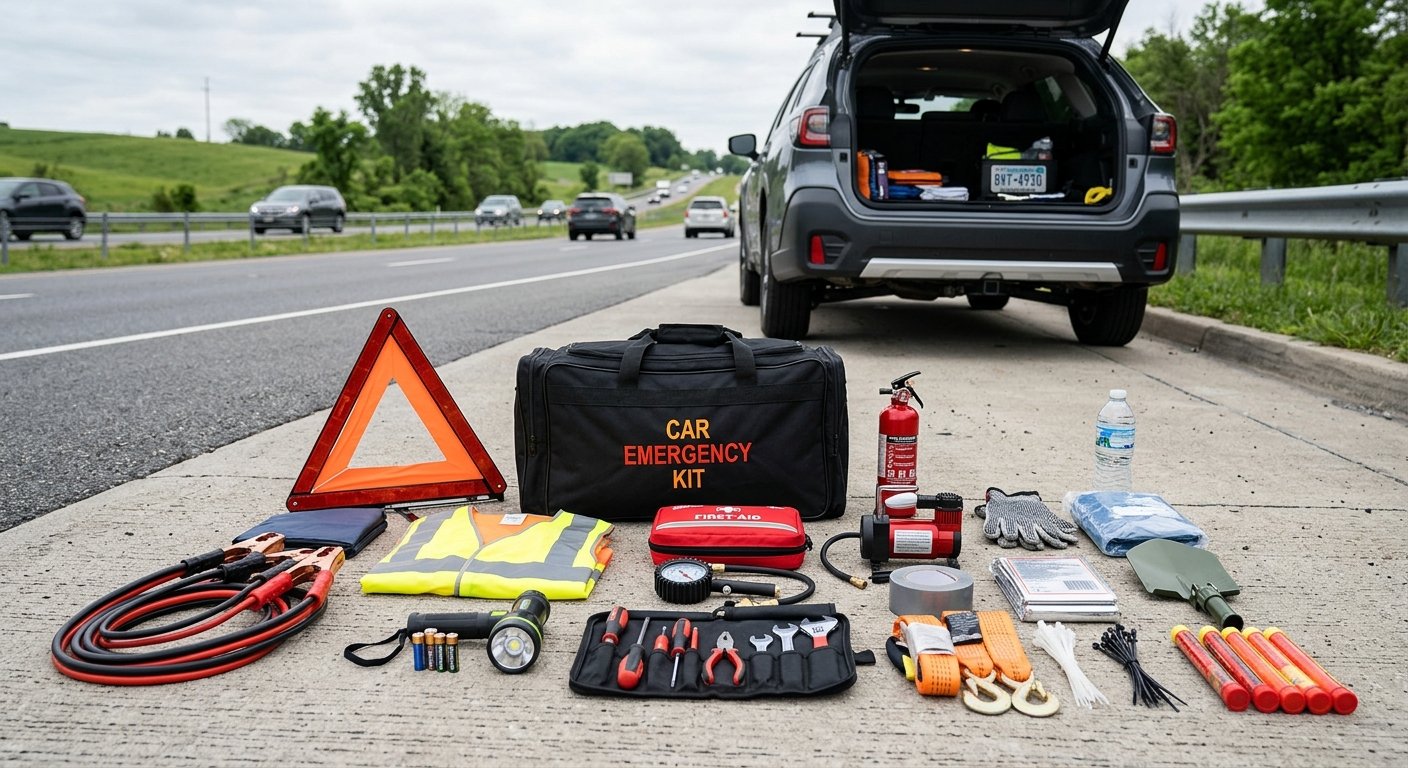
To make an emergency kit for your car, pack safety gear, first-aid supplies, food, water, tools, and seasonal items.
Learning how to make an emergency kit for your car can turn a stressful breakdown into a manageable delay. The best kit is not the biggest one. It is the one that fits your vehicle, local weather, health needs, and driving habits. This guide explains what to pack, how to store it, and how to keep it ready.
Why Every Driver Needs a Car Emergency Kit
A flat tire, dead battery, snowstorm, flood, or minor crash can happen without warning. Even a short trip can become risky if you are stuck far from help, especially at night or in poor weather.
A car emergency kit gives you basic tools and supplies while you wait for roadside assistance. It can also help you warn other drivers, stay warm, treat a small wound, or make a safe phone call.
The key is to think of your kit as a small backup plan. It should help with three needs:
- Staying visible and safe
- Protecting your body from cold, heat, or injury
- Solving simple vehicle problems
Learning how to make an emergency kit for your car also helps you spot gaps in your safety plan. For example, a family with young children may need diapers and snacks, while a driver in a snowy state may need traction aids and extra blankets.

How to Assess Your Car Emergency Kit Needs
Before buying supplies, consider where, when, and how you drive. A kit for a city commuter may differ from one for a rural driver who travels long distances.
Ask yourself these questions:
- Do you drive in snow, extreme heat, heavy rain, or icy conditions?
- How far are you from gas stations and repair shops?
- Do you often drive alone?
- Do you carry children, older adults, pets, or people with medical needs?
- Does your car have a spare tire, tire repair kit, or tire pressure monitor?
- Do you take road trips or mainly make short local trips?
Your vehicle also matters. A compact car has limited storage space, so choose small, multipurpose items. An SUV or pickup truck can hold larger gear, such as a full-size shovel, recovery strap, or larger water supply.
Check your owner’s manual before packing tools. It can show the location of the jack, spare tire, tow points, fuse box, and battery. Never guess where to lift your car. Using a jack in the wrong place can damage the vehicle or cause serious injury.
When learning how to make an emergency kit for your car, match the kit to real risks instead of copying a random list online.

Essential Items for a Car Emergency Kit
A strong car emergency kit has several layers. Start with safety and communication items. Then add first aid, food, water, tools, and comfort supplies.
Safety and visibility supplies
These items help other drivers see you and help you stay away from traffic:
- Reflective warning triangles
- A reflective safety vest
- A bright flashlight
- Extra batteries stored separately
- Glow sticks
- Road flares, if you know how to use them safely
- A whistle
* Work gloves - A small rain poncho
- A phone charging cable
- A portable power bank
A flashlight is more useful than a phone light when you need both hands free. Choose one with a strong beam and test it every few months.
If your car stops on a busy road, stay inside with your seat belt fastened when it is safer than walking near traffic. If you must leave the vehicle, use the side away from moving cars whenever possible.
First-aid supplies
A compact first-aid kit can help with small cuts, scrapes, burns, and blisters. It cannot replace professional medical care.
Pack these items:
- Adhesive bandages in several sizes
- Sterile gauze pads
- Medical tape
- Antiseptic wipes
- Disposable gloves
- Tweezers
- Small scissors
- Instant cold packs
- Burn gel or sterile burn dressings
- Pain medicine you can safely take
- Any essential personal medicine
Check medicine labels and expiration dates. Keep prescriptions in their proper containers, and do not leave temperature-sensitive medicine in a hot car unless your health professional says it is safe.
Food and water
Pack sealed bottled water or emergency water pouches. In cold weather, avoid leaving water in containers that can split when frozen.
Good food choices include:
- Protein bars
- Granola bars
- Crackers
- Peanut butter packets
- Dried fruit
- Shelf-stable snacks
- Baby food, if needed
- Pet food, if you travel with an animal
Choose foods that tolerate heat and do not require cooking. Replace them when they expire or become damaged.
Basic tools and vehicle supplies
Your kit should support simple tasks, not major repairs. Useful items include:
- A tire pressure gauge
- A tire inflator or portable air compressor
- A tire plug kit, if you know how to use it
- Jumper cables
- A portable jump starter
- A basic tool kit
- Duct tape
- Zip ties
- A multipurpose utility tool
- A tow strap rated for your vehicle
- A small fire extinguisher made for vehicle use
- A windshield scraper
- A folding shovel
- Spare fuses that match your vehicle
- A quart of motor oil, if your car uses it
- Extra windshield washer fluid
Jumper cables are helpful, but they require another vehicle and correct connection. A portable jump starter gives you more freedom, but it must stay charged. Test it on the schedule listed by the maker.
Do not use a tow strap unless you understand the correct attachment points. Never attach it to a bumper, steering part, or other weak component.

Seasonal Items to Add
A year-round kit is useful, but seasonal supplies make it safer.
Winter car emergency kit
Cold weather can become dangerous quickly. Add:
- A warm blanket or sleeping bag
- A winter hat
- Gloves or mittens
- Thick socks
- Hand warmers
- An ice scraper
- A folding shovel
- Cat litter or traction grit
- A waterproof jacket
- Extra windshield fluid rated for freezing temperatures
- A candle-style emergency heater only if used according to safety instructions
Never run the engine in a closed garage. If you are stuck in snow, make sure the exhaust pipe stays clear before running the engine. Carbon monoxide is a silent, deadly gas.
If the vehicle is buried, clear snow from the tailpipe and open a window slightly. Run the engine for short periods to conserve fuel and stay warm, but follow local emergency advice.
Summer car emergency kit
Hot weather creates different risks. Add:
- Extra drinking water
- Electrolyte packets
- A wide-brim hat
- Sunscreen
- Cooling towels
- A battery-powered fan
- Extra coolant only if it matches your vehicle
- A sunshade
- Light-colored blankets
Never leave children or pets alone in a parked vehicle. Interior temperatures can rise rapidly, even when the windows are partly open.
Rain, flood, and storm supplies
For areas with hurricanes, tornadoes, or heavy rain, consider:
- Waterproof document bags
- A battery radio
- Extra phone power
- A waterproof flashlight
- Water-resistant matches
- A basic tarp
- Sanitation bags
- Hand sanitizer
- A spare pair of shoes
Do not drive through flooded roads. Water can hide washed-out pavement, move a vehicle, and damage the engine. “Turn around, don’t drown” is practical advice, not just a slogan.

How to Pack and Store the Kit
A well-packed kit is easy to reach. Do not bury important supplies under luggage or loose items.
Use a strong plastic bin, soft-sided organizer, or two smaller bags. One bag can hold roadside tools, while another stores medical and comfort items.
Keep these items within reach of the driver:
- Flashlight
- Reflective vest
- Phone charger
- First-aid kit
- Emergency contact card
- Warning triangles
Store heavier items low and secure them so they do not become projectiles during sudden braking. Do not block airbags, pedals, windows, or emergency exits.
Add a printed card with:
- Your name and emergency contacts
- Important medical information
- Allergies
- Your roadside assistance number
- Your insurance company
- Your vehicle identification number
- Your car’s make, model, and license plate
A practical lesson from many roadside delays is that organization matters as much as the items themselves. A flashlight at the bottom of a packed trunk is not useful when you need it in the dark.
When deciding how to make an emergency kit for your car, pack items in clear bags and label them. That small step saves time and reduces panic.

How to Maintain Your Car Emergency Kit
A car emergency kit needs regular checks. Supplies can expire, leak, lose power, or become unsafe.
Inspect the kit at least twice a year. A good time is when daylight saving time begins and ends, or when you change from winter to summer tires.
Use this checklist:
- Test flashlights and replace weak batteries.
- Charge the jump starter and power bank.
- Check first-aid items for damage or expiration.
- Replace expired food and water.
- Confirm that medicine is safe to store in the vehicle.
- Inspect jumper cables for cracks or exposed wires.
- Check the tire inflator and pressure gauge.
- Confirm that the fire extinguisher is charged.
- Update emergency contacts.
- Remove items damaged by heat, moisture, or freezing.
Extreme temperatures are a major limitation for car storage. Heat can damage batteries, medicines, food, and electronics. Freezing weather can split water containers and reduce battery power.
For sensitive items, keep a small “carry-in” pouch at home. Bring it with you when temperatures are extreme, or store it in a temperature-controlled space.
Knowing how to make an emergency kit for your car is only half the job. Maintaining it keeps the plan reliable.
Common Mistakes to Avoid
Many drivers buy a ready-made kit and assume they are finished. Prepacked kits can be useful, but they often contain small tools, limited food, or supplies that do not match your climate.
Avoid these mistakes:
- Packing only tools and no water or warm clothing
- Keeping expired food in the trunk
- Forgetting a flashlight
- Carrying a jump starter without charging it
- Storing medicine in extreme heat
- Relying only on a cell phone
- Carrying loose heavy items
- Using a jack without reading the owner’s manual
- Stopping in a traffic lane when you can reach a safer place
- Driving through floodwater
- Leaving a child or pet in a parked car
- Assuming roadside assistance will arrive quickly in a storm
Another common mistake is overpacking. A kit that fills the entire trunk may be hard to move and difficult to access. Choose items that solve more than one problem.
For example, work gloves protect your hands, improve grip, and add warmth. A metal water bottle can carry water and, in some situations, provide a stronger container than a thin plastic bottle.

What to Do When Your Car Breaks Down
Your first priority is to reduce danger. Turn on your hazard lights and move the vehicle as far from traffic as you safely can.
Then follow these steps:
- Set the parking brake.
- Turn off the engine if it is safe to do so.
- Call emergency services or roadside assistance.
- Share your exact location, direction of travel, and vehicle description.
- Put on a reflective vest before leaving the vehicle.
- Place warning triangles only when it is safe.
- Stay with the vehicle unless emergency workers tell you to leave.
- Keep doors locked if you are in an unsafe area.
- Monitor weather, fuel, body temperature, and battery power.
- Signal for help if you cannot make a phone call.
Avoid standing behind or in front of your vehicle. Other drivers may not see you, especially on hills, curves, or in heavy rain.
If you smell fuel, see smoke, or suspect a fire, move away from the vehicle and call emergency services. Do not open the hood if flames are visible.
A car emergency kit supports good decisions, but it cannot remove every risk. When conditions are dangerous, professional help is safer than attempting a repair.

A Simple Budget for Building Your Kit
You do not need to buy everything at once. Build your kit in stages.
Basic starter kit
Start with:
- Flashlight
- Phone charger
- First-aid kit
- Water
- Snacks
- Blanket
- Work gloves
- Reflective triangles
- Tire pressure gauge
- Jumper cables
More complete kit
Next, add:
- Portable jump starter
- Tire inflator
- Folding shovel
- Seasonal clothing
- Fire extinguisher
- Tool kit
- Emergency radio
- Extra food and water
- Pet or child supplies
Long-distance travel kit
For remote roads and road trips, also consider:
- Paper maps
- Extra fuel only in an approved container
- More water
- A larger first-aid kit
- A satellite communication device
- Spare glasses
- Toilet paper and sanitation bags
- A tarp
- Extra socks and clothing
Do not let cost stop you from starting. A flashlight, water, blanket, and first-aid kit can provide real value while you build a more complete setup.

Frequently Asked Questions About How to Make an Emergency Kit for Your Car
What should be in a basic car emergency kit?
A basic car emergency kit should include water, shelf-stable food, a flashlight, first-aid supplies, a phone charger, work gloves, jumper cables, a tire pressure gauge, and reflective warning devices. Add a blanket and seasonal clothing for extra protection.
How often should I check my car emergency kit?
Check your kit at least twice a year and after every emergency use. Test batteries, recharge electronic devices, replace expired food, and inspect supplies for heat or moisture damage.
Should I keep water in my car?
Yes, but use sealed containers designed for storage and replace them as recommended. Extreme heat and freezing temperatures can damage containers, so inspect them often and move water indoors during severe weather.
Is a portable jump starter better than jumper cables?
A portable jump starter can work without another vehicle, which makes it useful for solo drivers. Jumper cables cost less, but they require a second vehicle and correct connection, so many drivers carry both.
What should I add to a winter car emergency kit?
Add a warm blanket, winter hat, gloves, thick socks, hand warmers, a folding shovel, an ice scraper, and traction material. Keep the exhaust pipe clear of snow before running the engine.
Can I store medicine in my car emergency kit?
Some medicines may be damaged by heat or cold, so check the storage instructions first. Keep temperature-sensitive medicine with you rather than leaving it in the vehicle.
How much water and food should I keep in my car?
For routine driving, carry enough for a short delay, such as several bottles of water and a few high-energy snacks. For remote travel or severe weather, pack more based on the number of passengers and the expected travel time.
Conclusion
Learning how to make an emergency kit for your car is a simple way to prepare for breakdowns, storms, injuries, and long roadside delays. Focus first on visibility, communication, water, food, warmth, first aid, and basic vehicle tools.
Build the kit for your climate, car, passengers, and driving routes. Store it where you can reach it, secure loose items, and check it twice a year. Start with the basics today, then improve the kit over time as your needs change. Share your own must-have car emergency item or explore more vehicle safety resources to stay prepared.